Best Office Cleaning Tampa
You require Tampa cleaning experts who prove trust. Demand OSHA/CDC-aligned SOPs, EPA List N chemicals, and ISSA/GBAC or CIMS-GB frameworks. Verify background checks, identity, and annual re-screening with access-level badges. Insist on certified training, bloodborne pathogen and HazCom modules, pass/fail audits, and ATP-based QA with defect and rework trends. Look for real-time timestamps, photos, and corrective-action windows. Request flat-rate, itemized scopes, SLAs, and insured compliance. Eco-safe HEPA systems and calibrated dilution minimize risk, cost, and disruption-here's how to choose confidently.
Key Points
- OSHA 1910/1926-trained, GBAC/ISSA-compliant teams with validated credentials, security clearances, and annual re-evaluation for trusted Tampa facility access.
- Thoroughly documented SOPs, QA assessments, ATP testing, and timestamped photo evidence deliver reliable, audit-ready results across all Tampa sites.
- Team member competence verified through onboarding proof, annual refresher training, pass/fail evaluations, and mentorship tracking error-rate declines over time.
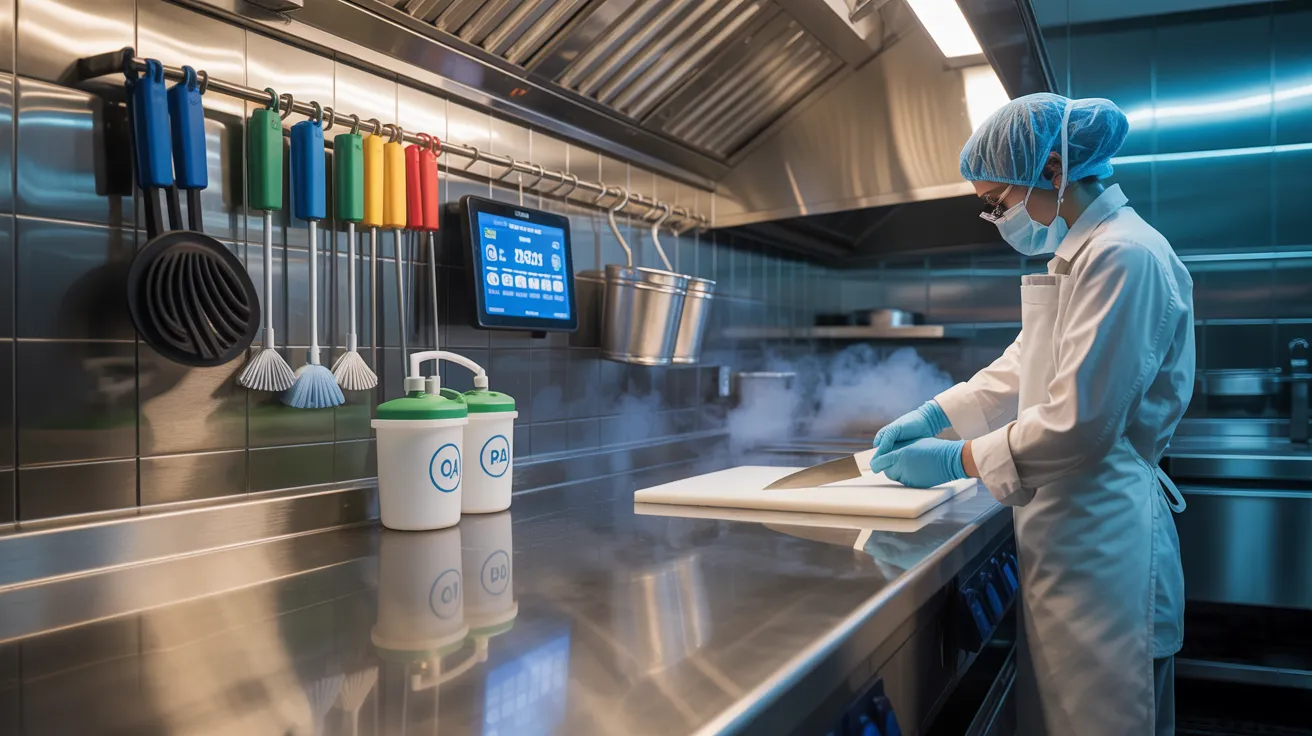
- EPA List N approved chemicals, 10-second SDS access, microfiber with color-coding, and closed-loop mopping methods reduce the risk of cross-contamination.
- Occupancy-coordinated scheduling, clearly defined SLAs, and real-time dashboard tracking minimize disruption while delivering measurable cleaning results.
The Importance of Credibility and Consistency in Commercial Cleaning
Prior to comparing prices, you should vet a cleaning partner's credibility and consistency because they directly affect health outcomes, regulatory compliance, and operational uptime. You're responsible for metrics: incident rates, audit scores, absenteeism, and downtime. Reliable providers demonstrate third-party certifications, background checks, safety training completion rates, and verifiable references. They also share SOPs, QA inspection frequencies, and corrective-action timelines.
You should expect Steady results underpinned by data: pass-fail patterns, ATP measurements, and time-stamped checklists. Request service-level commitments, not promises-reply timeframes, re-clean thresholds, and escalation paths. Reliable documentation guards you during inspections and claims. Consistency builds Client trust, decreases variability risk, and stabilizes your workspace. When vendors assess, report, and improve, you lower exposure, predict costs accurately, and keep operations running.
Key Services Which Every Tampa Cleaning Company Should Provide
You require a cleaning partner that schedules daily and nightly janitorial tasks based on occupancy patterns, tracks completion rates, and flags exceptions. Match that with floor care and maintenance using surface-specific approaches (e.g., VCT, carpet, terrazzo) and measurable outcomes like gloss readings and lifespan extensions. Lastly, demand disinfection and high-touch cleaning mapped to traffic heatmaps, validated with ATP testing, and calibrated to reduce pathogen risk.
Daily and Nightly Janitorial Solutions
Reliably executed round-the-clock janitorial maintains Tampa facilities safe, compliant, and professional by sticking to a defined checklist and schedule. You set measurable targets-touchpoint disinfection frequency, restroom resets per shift, waste stream accuracy-and review them on a weekly basis. With precise shift scheduling, you avoid coverage gaps, match service windows to occupancy peaks, and control overtime risk. You'll establish SOPs for restrooms, breakrooms, offices, and high-traffic corridors, logging completion times and exceptions.
Utilize EPA-registered chemistries, color-coded microfiber, and closed-loop mopping to reduce cross-contamination. Implement equipment rotation to extend asset life and decrease downtime; track hours on vacuums and autoscrubbers, then schedule preventive maintenance. You record incidents, spill responses, and missed services, then perform root-cause analysis. This reduces complaints, boosts IAQ, and supports OSHA and CDC guidance.
Caring for and Maintaining Your Floors
Preserving floors via a well-defined care program reduces slip risk, extends asset life, and maintains brand image. You begin with a site audit: traffic counts, soil loads, floor types, and finish condition. From that data, we create a schedule that sequences daily dust control, scheduled machine scrubbing, and periodic restoration.
With sealed concrete, you use pH-appropriate detergents, examine film integrity quarterly, and re-seal based on gloss meter readings and water-drop tests. For polished terrazzo surfaces, you sustain shine through diamond pad honing and measured RPM burnishing, tracking coefficient of friction to meet ANSI standards.
You control risk by setting up walk-off matting at 15 linear feet minimum, establishing spill response times at less than five minutes, and documenting each service with photos, meter readings, and corrective actions.
Disinfection and High-Touch Cleaning
While pathogens change seasonally in Tampa's humid climate, critical touchpoint disinfection requires a fixed, measurable program. You commence by defining risk zones through surface mapping, then rank touchpoints-door hardware, railings, elevator buttons, POS terminals, breakroom fixtures-by usage rate and user density. Implement contact audits to quantify touches per hour and establish cleaning intervals. Verify product choice: EPA List N, correct dwell times, and material compatibility to prevent corrosion.
Create uniform processes: pre-clean soil, apply disinfectant, maintain proper exposure time, and employ color-designated materials to avoid contamination spread. Adjust timing protocols to occupancy peaks and modify based on inspection results. Validate effectiveness with ATP testing, random inspections, and occurrence documentation. Educate personnel, monitor batch codes, and log all procedures, so you minimize pathogen transfer and verify regulatory conformity.
Sector-Focused Proficiency: Retail Spaces, Restaurants, Offices, and Medical
Since each facility type carries distinct risks and regulations, you must have a cleaning partner that tailors methods, chemicals, and verification to your environment. We begin with client onboarding that charts square footage, traffic patterns, and risk zones, then align schedules to your staff workflows.
For office settings, we prioritize allergen minimization, sensor-verified restroom cycles, and night-shift dust control to maintain equipment uptime. For medical spaces, we separate clean/dirty corridors, color-code equipment, and log dwell times to reduce cross-contamination risk. Retail requires fast-turn floor care, point-of-sale sanitizing, and backroom degreasing that won't disrupt merchandising. Restaurants require grease-load indexing, hood-adjacent detailing, and ATP spot checks that confirm food-contact surfaces before opening.
You get documented tasks, photo timestamps, exception alerts, and regular improvement evaluations that refine results over time.
Standards, Certifications, and Compliance You Should Expect for Cleaning
You need to ensure that your provider follows industry-standard protocols (including ISSA/GBAC, CDC/EPA guidance) with documented SOPs and measurable QA checks. Prioritize safety and compliance by verifying OSHA adherence, chemical SDS management, and EPA-registered disinfectant use tracked by lot and dwell time. Mandate certified staff training with documentation of onboarding, annual refreshers, and competency audits connected to incident and corrective-action logs.
Professional Industry Procedures
Before comparing prices, verify that a Tampa commercial cleaner aligns with recognized standards and can demonstrate compliance. Request written SOPs mapped to ISSA/GBAC and CDC guidelines, plus evidence of protocol audits performed at defined intervals. You should see task frequencies, dwell-time requirements, validated chemistries, and equipment calibration logs. Require training completion rates, pass/fail scores, and corrective actions documented within 48 hours.
Ensure they follow regulatory updates and modify SOPs within set SLAs. Inspect chain-of-custody for chemicals, dilution verification, and lot traceability. Demand zone-based workflows to avoid cross-contamination, with color-coding and tool segregation. Review QC benchmarks: ATP thresholds, defect rates, rework percentages, and trend reports. Finally, require third-party certification status, audit summaries, and measurable KPIs linked to your site's risk profile.
Compliance and Safety
Although price pressures encourage shortcuts, compliance and safety establish the floor for acceptable performance in Tampa commercial cleaning. You need confirmed alignment with OSHA, EPA, and local code: SDS availability within 10 seconds, chemical dilution logs, and documented incident rates below industry benchmarks. Require clear hazard signage deployed before, during, and after tasks, plus lockout/tagout compliance for equipment.
Demand a written compliance matrix that maps tasks to standards (such as bloodborne pathogens, slip-fall controls) and a chain-of-custody for disinfectants with EPA List N verification. Insist on scheduled PPE audits-fit checks, replacement cycles, and exception reporting—so gaps don't persist. Demand waste segregation logs, ventilation checks for aerosolized products, and post-service compliance summaries. Your vendor should provide corrective-action timelines within 24 hours when deviations occur.
Certified Personnel Instruction
Because certification proves competence, ensure crews up-to-date with recognized standards: OSHA 1910/1926, EPA disinfectant use (List N), CDC healthcare cleaning, and ISSA/GBAC or CIMS-GB frameworks. Request proof: completion dates, refresher intervals, and pass rates. You're buying risk reduction, so validate bloodborne pathogen, hazard communication, and respiratory protection modules.
Demand a documented training system: baseline skills assessment, gap analysis, hands-on labs, and audited checklists. For medical or food preparation locations, verify terminal-clean protocols and ATP verification targets. Require chain-of-custody for chemicals
Ongoing competence matters. Require quarterly drills, surface-compatibility evaluations, and supervisor accompaniment using evaluation rubrics. Effective mentorship programs should pair certified leads with incoming techs, document error patterns, and show incident decline over time.
Workforce, Instruction, and Background Verifications That Foster Trust
Before the first cleaning task starts, you need a carefully evaluated team, a documented training program, and read more audit-ready background checks that lower risk. You start by creating role profiles, then source candidates with verifiable work histories. You conduct reference checks and identity verification, followed by county, state, and federal criminal screens. You confirm eligibility to work and assess cultural fit to reduce turnover.
Your training system ensures consistent outcomes: OSHA core requirements, chemical processing, equipment calibration, surface specification procedures, and incident reporting. Each module contains pre and post assessments, skills checklists, and sign-offs stored in a secure LMS. Supervisors perform observed competencies at intervals of 30, 60, and 90 days.
You copyright chain-of-custody for screening results, re-screen annually, and maintain access-level badges. The result: reliable performance
Scheduling, Correspondence, and Quality Assurance Without Disruption
Anchor operations with a cadence that fits your building, not the other way around. You define service windows; we align crews with Flexible Scheduling created using occupancy data, traffic patterns, and event calendars. We define zones, define SLAs, and arrange tasks to provide Minimal Disruption to tenants and revenue workflows.
Leverage Real-time Communication to maintain control. You'll see timestamped check-ins, completion photos, and incident flags in a shared dashboard. Deviations trigger corrective actions within defined response thresholds.
We maintain systematic quality control: KPI scorecards, digital inspections, and trend analysis. We measure touchpoint frequency, turnaround times, and defect rates. Predictive Maintenance signals deep cleans or consumable replenishment before issues arise. The result: less callbacks, reliable results, and a cleaning program that evolves with your building's needs.
Sustainable Materials, Tools, and Safety Protocols
With scheduling, communication, and QA locked in, we apply the same discipline to sustainable products, equipment, and safety. You get Green certification standards embedded in every step. We evaluate plant based solutions through SDS reviews, surface compatibility tests, and ATP hygiene measurements. Data dictates selection: dwell times, kill-claim scope, and residue scores must satisfy benchmarks without VOC spikes.
Our equipment strategy minimizes risk and excess. HEPA 13 vacuums collect 99.95% of contaminants; microfiber systems minimize chemical load by up to 90%. Battery scrubbers use measured dispensing to avoid excess moisture and slips. We calibrate dilution with color-coded stations and confirm ppm weekly.
Safety standards are essential: GHS labeling, closed-system containers, PPE according to specific tasks, machine lockout/tagout protocols, and incident audits that drive corrective actions.
Clear Costs, Agreements, and Service Level Agreements
While cleaning outcomes matter, your risk profile and budget control depend on transparent pricing, clear contracts, and measurable SLAs. Insist on an itemized scope tied to a flat rate, not ambiguous hourly ranges. Insist on frequency, square footage, task lists, and consumables to map to line-item costs. Establish response times, quality thresholds, and corrective-action windows in the SLA, with credits for misses.
Specify change-order rules, escalation channels, and proof-of-service: time stamps, geo-tagged check-ins, and audit checklists. Demand renewal terms, a clear cancellation policy, and caps on annual increases. Verify insurance limits, indemnification, and background-screening attestations. Measure KPIs monthly: defect rate, rework percentage, incident reports, and uptime for high-traffic zones. By implementing this system, you can reduce variance, eliminate scope creep, and preserve cash flow.
How to Assess, Compare, and Onboard the Perfect Tampa Cleaning Partner
Before selecting potential vendors, define your evaluation benchmarks and risk elements so you can evaluate Tampa cleaning firms against concrete evaluation points. Quantify needs: area measurements, occupancy patterns, adherence mandates, spending constraints, and service time objectives. Conduct structured vendor interviews with standardized questionnaires on staffing ratios, supervision, supplies, and contingency plans. Require reference verification focused on parallel sites, historical data, and inspection findings. Review proposals using prioritized evaluation standards: defect rate, first-pass yield, audit scores, and resolution SLAs.
Start with defined testing periods to confirm personnel reliability, security measures, and financial conformity. Set service milestones and inspection cadence before award. Apply an enrollment checklist: background screenings, location introduction, security protocols, chemical data sheets/MSDS, access restrictions, and report structures. Measure weekly performance indicators and schedule a 30-day evaluation to validate compatibility.
Frequently Asked Questions
Are You Able to Provide Emergency Cleanup Within Two Hours of a Spill or Incident?
Yes. You'll get emergency cleanup within two hours, backed by a rapid response protocol. We assess your incident, dispatch a certified team, and appear with OSHA-compliant PPE and EPA-registered agents. We execute site assessment, containment, biohazard mitigation, removal, and surface decontamination, then validate results with ATP testing. We'll provide you with timestamped documentation and a risk report. If access, power, or permits hinder arrival, we escalate resources and deliver ETA updates every 15 minutes.
Do You Provide Cleanup Services After Events for Conferences, Trade Shows, or Grand Openings?
Absolutely. You get post-event cleanup for grand openings, conferences, and trade shows. Imagine floors gleaming before the last banner drops. We follow a checklist-driven process: debris sweep, waste segregation, hard-floor scrubbing, carpet extraction, restroom reset, and touchpoint sanitizing. We oversee after-event staging, vendor coordination, and loading-dock timing to reduce delays. You'll get time-stamped reports, QA photos, and incident logs. We reduce risks via insured crews, OSHA-compliant chemicals, and equipment redundancy.
How Do You Handle Access Keys, Alarms, and Building Security Protocols?
You receive a thoroughly documented, risk-sensitive process for access credentials, notification systems, and safety protocols. Our team implements key control with unique IDs, logging systems, and managerial reviews. For notification integration, we organize security codes, entry periods, and response trees, followed by testing procedures before service. Staff pass security clearances and location-specific training. Our process involves geofenced check-ins, time-logged photos, and incident reports. Occurrences activate cause analysis and remedial actions. You have oversight through scheduled reviews.
Can We Ask for the Same Cleaning Team Every Time?
Yes, you can request the same cleaning team for every visit. We prioritize consistent teams to meet client preferences, reduce variability, and enhance quality metrics over time. We assign your team as the default assignment, monitor attendance, and utilize backups familiar with your site notes to prevent disruptions. You'll get documented processes, checklists, and performance KPIs. If staffing challenges arise, we notify you, present choices, and maintain continuity through standardized procedures.
What Is Your Approach to Handling Lost or Damaged Items?
Just as with a detailed flight strategy, you must file your claim within 24 hours; we'll capture every detail, commence insurance validation, and launch our claims process. You'll receive a written timeline, photos, and findings for transparency. When we establish liability, we deliver compensation within specified reimbursement parameters. We enhance worker oversight with audits, access logs, and retraining. You will obtain status updates at each step, and we close every case with preventive controls to reduce future risk.
Concluding Remarks
It's time to pick a Tampa cleaning partner that's proven, not promised. Use data: certifications, incident rates, QA scores, response SLAs, and audit logs. Confirm processes: checklists, SOPs, training hours, and background checks. Minimize risk: OSHA/CDC compliance, chemical SDS, and insurance limits. Require fit: sector expertise, off-hour scheduling, and eco-safe products. Evaluate apples-to-apples pricing and measurable KPIs. Then test, review, and refine. With the right partner, your facility runs like a well-calibrated instrument-precise, consistent, and trusted.